Elon Musk and OpenAI Trial Explained: Why the Case Matters for the Future of AI
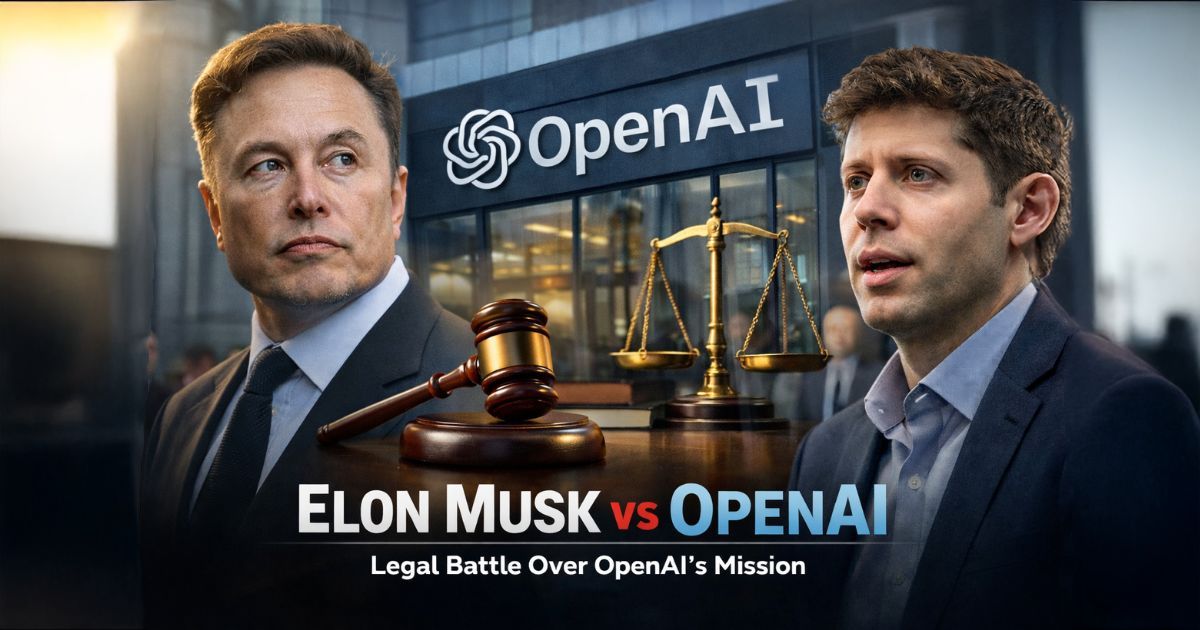
The legal clash between Elon Musk and OpenAI has moved beyond speculation and into a courtroom. What began as a disagreement over direction and control has now become one of the most closely watched technology trials in recent years. At the center of the case is a simple question with wide implications. Did OpenAI remain faithful to the principles it was founded on or did it change course without being transparent with its earliest backers?
As the trial approaches a jury will be asked to examine years of internal decisions funding structures and governance debates. The outcome may influence how future AI organizations are built and how mission driven technology groups balance ethics with growth.
How OpenAI began and where disagreements formed
OpenAI began operations in 2015 as a research group structured around a non profit model. Its founding goal was to advance artificial intelligence in a way that served the broader public rather than private shareholders. Elon Musk was one of the early supporters who provided funding credibility and public attention during the organization’s formative period.
As AI research grew more expensive OpenAI explored ways to secure long term financial backing. This led to the creation of a for profit operating arm overseen by the non profit parent. While this structure allowed OpenAI to attract large investments it also raised questions about whether the organization’s original mission could be preserved under commercial pressure.
Over time disagreements between Musk and OpenAI leadership deepened. Musk eventually stepped away from the board and later launched his own AI company xAI. The separation did not end tensions. Instead it laid the groundwork for the lawsuit that followed years later.
Why Elon Musk filed the lawsuit
Elon Musk alleges that OpenAI shifted toward commercial objectives that conflicted with commitments made during its founding. According to court filings he believed OpenAI would remain firmly aligned with its non profit mission. He argues that internal discussions and later actions show a different reality.
OpenAI disputes this claim and maintains that funding challenges and structural changes were openly discussed. The company says Musk was aware of the financial demands required to compete in advanced AI research.
In January a US federal judge ruled that the evidence presented was sufficient for the case to proceed to a jury trial. That decision cleared the way for the release of internal documents depositions and communications that are now shaping public understanding of the dispute.
What the unsealed documents show
More than one hundred documents were unsealed during the discovery process. These include sworn testimony and internal records from key figures such as Sam Altman Greg Brockman Ilya Sutskever and Satya Nadella.
One of the most discussed pieces of evidence is a set of private diary entries written by Brockman. In these notes he reflected on funding challenges leadership concerns and uncertainty about long term structure. The judge referenced these writings when determining that Musk’s claims warranted a trial.
The documents also reveal how OpenAI leaders viewed competition in the AI space and how partnerships were evaluated. Microsoft ultimately became OpenAI’s most significant partner which further complicated governance and oversight questions.
The role of Microsoft in the case
Microsoft’s relationship with OpenAI is a key part of the trial. The technology giant invested heavily in OpenAI and integrated its models into commercial products. Musk alleges that Microsoft benefited from his early support of OpenAI and that the partnership accelerated OpenAI’s move toward profit driven outcomes.
Microsoft denies any wrongdoing and argues that its partnership with OpenAI was lawful and transparent. Court filings show that Microsoft is seeking to limit how damage estimates and expert testimony are presented to the jury.
The trial will examine whether Microsoft knowingly participated in any breach of commitments or whether it simply acted as a commercial partner responding to market realities.
Leadership turmoil adds context
The lawsuit has drawn renewed attention to the dramatic leadership crisis at OpenAI in late 2023. At that time the non profit board removed Sam Altman as chief executive citing concerns about internal communication. Within days Microsoft hired Altman to lead a new AI initiative. Nearly all OpenAI employees threatened to resign unless Altman was reinstated.
Altman returned as CEO and the board was largely replaced. These events raised questions about governance independence and the balance of power between OpenAI and its partners. While not the core of the lawsuit they provide important context for understanding internal tensions.
Why this trial matters beyond OpenAI
The trial between Elon Musk and OpenAI is not just about one company or one founder. It highlights broader challenges facing AI research organizations. Developing advanced AI systems requires enormous financial resources. At the same time public trust depends on transparency accountability and adherence to stated missions.
The case may influence how future AI groups structure their governance and how donors and early supporters protect their interests. It may also shape regulatory discussions around AI oversight especially as governments look more closely at powerful technology firms.
For a detailed breakdown of the legal proceedings and what lies ahead you can read our full coverage of the Elon Musk and OpenAI trial here: https://zipaitech.com/elon-musk-openai-trial/
What happens next
Pre trial motions are expected to continue in the coming weeks as both sides attempt to narrow the scope of evidence presented to jurors. When testimony begins the court will hear directly from executives board members and experts involved in OpenAI’s evolution.
The jury will be tasked with deciding whether commitments were broken and whether financial gains resulted from misleading representations. No matter the verdict the trial is likely to leave a lasting mark on how the technology industry approaches mission driven innovation.
Final thoughts
The dispute between Elon Musk and OpenAI reflects a larger tension within modern technology. Innovation often begins with idealism but sustainability demands resources. How organizations navigate that transition may define their legacy.
As artificial intelligence becomes more central to society the questions raised by this case will not fade quickly. The outcome may help determine how future AI ventures balance ambition responsibility and trust.

Comments
Post a Comment